Free Will, Checkmate, and the Grandmaster’s Invitation
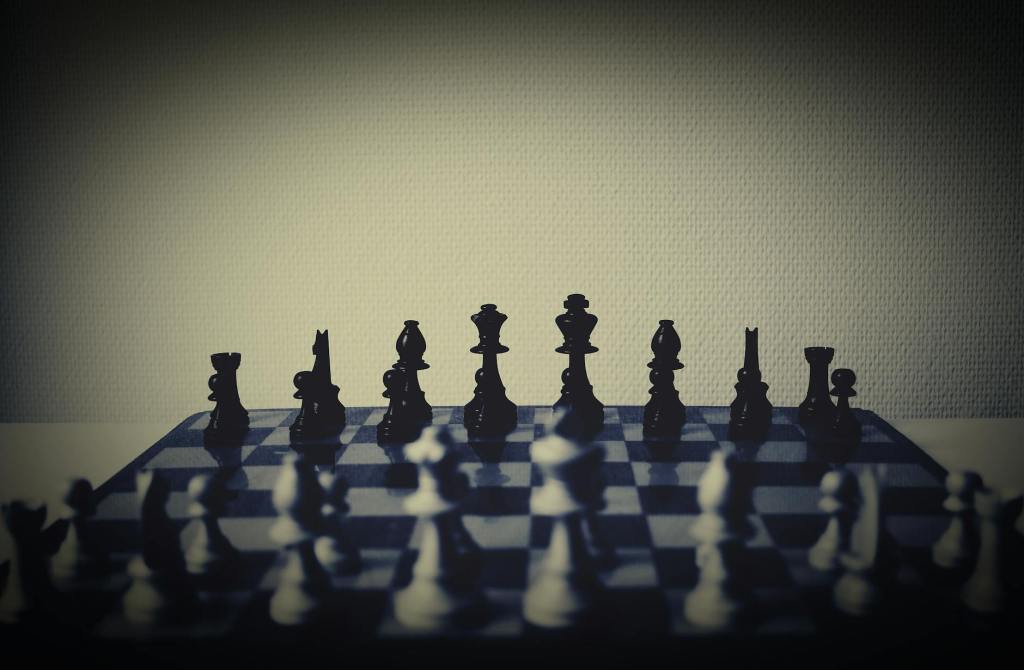
Life, for all its mysteries and maneuverings, can be imagined as a grand game of chess with the Master of the universe. Not played on just any chessboard, but one etched from the cosmos. Despite a vast, three-dimensional world around you, for the next indeterminate amount of time, your life will be confined to a two-dimensional plane and sixteen pieces. You will be limited by rules and physical boundaries. What happens upon these sixty-four squares will echo with eternal consequence. Sitting across from you at this prepared table is none other than the Grandmaster Himself—God with sixteen pieces of His own to command. Infinite in wisdom, flawless in foresight, He invites you not to watch, but to play.
Yes, He will win. He’s the Grandmaster. He invented the game for heaven’s sake. He always wins. But that is not the point.
The point is we have been invited.
Before even sitting down to play, you are asked which color to play. “Light or dark?” Intriguingly, that is a question you have to answer every day in real life. I digress.
God, in His sovereign brilliance, extends to us the dignity of free will—a say-so in how the game is played. We are given pieces—some more powerful than others, some in advantageous positions, some seemingly backed into a corner from the start.
The board is set. For a mere moment, you are equal to the master. Then life begins. The chess match has started. You are a player in this game—an agent of movement, strategy, and change.
Your Move
When it’s your turn, the choice is yours: push a pawn, move a knight? Early on, choices are limited. The full spectrum of what you can do is waiting to be realized. Later you get to make bigger moves. Develop your bishops. Castle the king for safety. Bring out your queen. Your moves are your own. But with each move, God responds. You move. He moves.
The two of you silently decide what kind of game will be played as the board develops. At times, He can feel like a dancing partner rather than an opponent. You can play safe and controlled, or bold and aggressive. You can even make a move that may force God to alter His strategy. Don’t get delusional. He’s a Grandmaster. His responses are not random. His countermoves are calculated with infinite perspective. Despite this, He allows you to play. He gives you the space to risk, to err, to shine.
Sometimes, He plays aggressively—tightening your options, forcing your hand. Your board may feel like a battlefield, your king constantly under siege. The choices narrow. You move a pawn not because it’s strategic, but because it’s the only legal move left. And in these moments, it’s tempting to believe you’re losing. But even in pressure, the Grandmaster is not your enemy—He’s sharpening you.
Other times, God plays defensively—allowing you to control more of the board. You feel confident, creative, empowered. Your pieces flow with elegance. But remember, whether your board is wide open or clenched with conflict, the Master is still across from you. Watching. Guiding. Teaching.
If you’re still learning the game (as we all are), the wise Master will be patient with you. You apprehensively reach for the next piece to move. The Master clears His throat. You hesitantly reach for another piece. “Are you sure?” The firm but small voice utters from across the table. This next move may be a pivotal juncture of the game. Do you heed the advice or do you make the move you think is best? Is He testing your confidence or genuinely warning you of a serious mistake? It is simultaneously comforting and infuriating. He won’t move the pieces for you. The choice is yours.
Pay close attention to your game. God is playing the same chess match with every other person on earth. To pay too much attention to another’s game would be a blunder. Others may appear like their game is going better than yours. That may be true. But wishing your contest was more like another’s will make you lose sight of what you need to do on your own board. Every game has its ebbs and flows, but the results of every game will be the same as yours. Play your game, not someone else’s.
The Temptation to Resign
Some players, wearied by the game, consider tipping their king. “What’s the point?” they whisper. “I can’t win.” But this is to misunderstand the game. You were never playing against God; you were playing with Him. Your participation was the point. Your decisions, your growth, your perseverance—this was always the purpose.
To resign is to reject the gift of the game itself.
Yes, the checkmate will come. God will have the final move. But what matters is how you played. Did you learn from your mistakes? Did you risk bold sacrifices? Did you defend what mattered? Did you press forward even when the odds were stacked?
Keep playing. Play to the very end. Make Him checkmate you.
Endgame and Eternity
Every long game of chess has its endgame. Fewer pieces, less choices, yet somehow—more clarity. A game once chalked full of unpredictable moves and positions slows its pace. The final moves come seemingly more quickly yet each move seems more predictable than the last. With limited options, tension has waned. You certainly have fewer moves than a younger version of yourself once did. You lose a piece here. Another there. Eventually it’s just you and your King. Then, check. Two options left. Check again. One last move. Checkmate.
A hand reaches across the table. Are you grateful for the experience or are you bitter about how the game unfolded? Do you shake the hand that just removed all your pieces from the board? Surely you do. You lift up your eyes to see a massive world beyond the table. Your eyes adjust to the vivid colors after staring only at black and white for some time. The same will be when we see heaven after life on earth. Your mortal existence will seem as two-dimensional and bichromatic as a chess board when compared to eternity. Will the relationship with the Master continue long after the game is over? That is the offer. Your attitude about the game and how you played will determine the answer.
Here is the twist of divine mercy—when God wins, we do not lose. His victory includes us. His triumph is our transformation. The pieces go back into the box, but the true player remains. You are welcomed into eternity, not as a defeated opponent, but as a beloved student who dared to sit across from the Master and play.
Conclusion
In life, we have freewill inasmuch as you have freewill in a game of chess. On your turn, the board is yours, but God responds. Choices have consequences and the master gives you the dignity to decide how the game unfolds. There are approximately 10^45 (1 with 45 zeros after it) potential positions in the game of chess. The Grandmaster has seen them all. You could say that God has predestined every one of those positions. God knows how every game can end. You get to decide which ending is yours. The pieces are in your hand. You won’t outwit the Grandmaster, but you’re not meant to. You are meant to engage. To wrestle. To think. To love the game, even when it’s hard.
So accept the invitation. Play the game. Play with courage. Play with creativity. Play to Learn. Play to Grow, Play to Win.
The Grandmaster is smiling.
It’s your move.
 EPHword
Leave a comment